
The Night Cat Backpacking Tent is worth buying for beginners, occasional solo campers, festival users, motorcycle travelers, and budget-conscious buyers who want a straightforward shelter for around $50. The standard ZP-10 combines a compact packed size, PU 3000 mm waterproof materials, taped seams, screened ventilation, and a simple two-pole dome structure. (Night Cat Store)
Its biggest weakness is weight. The one-person version weighs about 4.4 pounds, while the two-person version reaches approximately 5.5 pounds. That is acceptable for short hikes, casual camping, and vehicle-supported trips, but heavy for long-distance backpacking.
Worthflect rating: 7.9/10
Best for: First-time campers, one- or two-night trips, Scouts, festivals, fishing, motorcycle camping, and short backpacking routes.
Skip it if: You count every ounce, regularly hike long distances, need a full double-wall tent, or camp in exposed mountain weather.
Review scope: This Night Cat backpacking tent review focuses on the standard ZP-10 one- and two-person dome tent. The evaluation is based on its current specifications, construction, intended use, and practical trade-offs rather than a claim of long-term personal ownership.
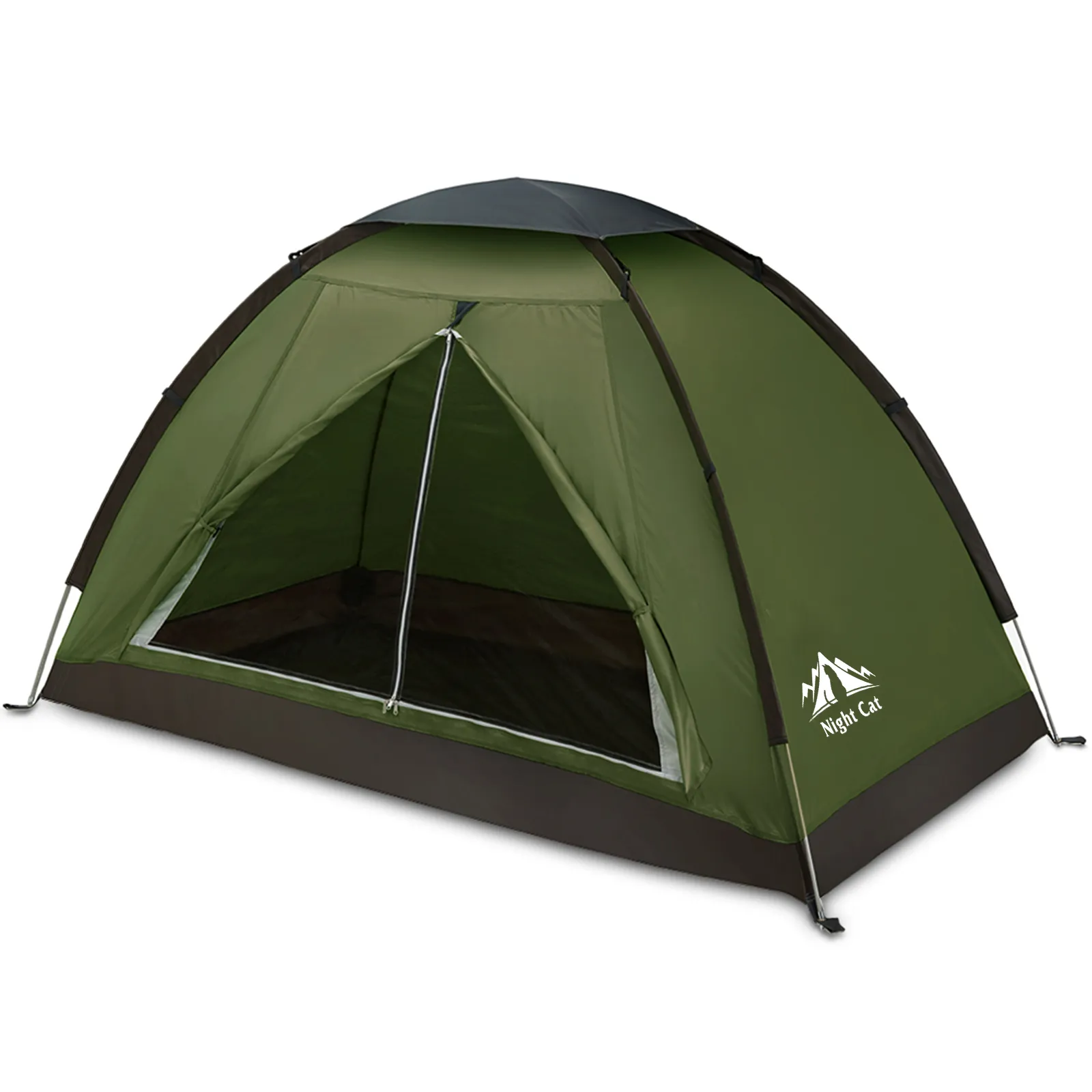
Caption: The standard Night Cat Backpacking Tent uses a familiar dome shape with two fiberglass poles, a front mesh door, and a compact roof cover.
Night Cat Backpacking Tent Specifications
| Feature | One-person version | Two-person version |
|---|---|---|
| Listed starting price | About $49.99 | Varies by size and destination |
| Open size | 7.2 × 4 × 4 ft | 7.2 × 5 × 4 ft |
| Weight | 4.4 lb / 2 kg | 5.5 lb / 2.5 kg |
| Packed size | About 16.5 × 4.7 × 4.7 in | Slightly larger |
| Tent and roof fabric | 210D polyester, PU 3000 mm | 210D polyester, PU 3000 mm |
| Floor | 150D Oxford, PU 3000 mm | 150D Oxford, PU 3000 mm |
| Poles | Protected fiberglass | Protected fiberglass |
| Construction | Single-layer dome | Single-layer dome |
Night Cat currently lists the ZP-10 at $49.99 with one- and two-person size options. The official page specifies rain-resistant 210D polyester for the body and roof, a 150D Oxford floor, and a PU 3000 mm rating.
The Real Buying Decision: Low Price or Low Weight?
The main reason to choose this tent is value. For roughly $50, it provides the basic components needed for a complete shelter: a waterproof floor, insect screening, poles, stakes, guylines, and a carry bag. It does not require trekking poles or a specialized pitching technique.
That makes it appealing for someone buying a first tent or building an inexpensive camping kit. The familiar dome design is easier to understand than many trekking-pole shelters, while the relatively thick materials may feel less delicate to a beginner.
The trade-off becomes clear once the trip involves serious mileage. At 4.4 pounds, the solo model can become one of the heaviest items in a backpack. Once a sleeping bag, pad, food, water, clothing, and cooking gear are added, the difference between this tent and a two-pound shelter becomes noticeable.
For a short walk from the car, a Scout camp, a fishing weekend, or a modest overnight trail, the weight can be reasonable. For repeated 10- to 15-mile hiking days, it is difficult to justify. The right question is not whether the tent can physically fit in a backpack; it is whether 4.4 pounds suits the distance you actually plan to carry it.
Setup: Simple, but the Upgraded Version Is Better
The ZP-10 uses two fiberglass poles that cross diagonally and slide through sleeves. Night Cat claims setup takes approximately one to two minutes. The structure is straightforward, although beginners should allow additional time for staking, adjusting tension, and positioning the entrance.
Pole sleeves are simple but less convenient than clips because each pole must be fed through the fabric. Night Cat’s upgraded ZP-30 model uses external clips and is currently listed at about $54.99 only around $5 more than the standard version. It also includes a small vestibule for shoes, while maintaining a similar stated weight and PU 3000 mm weather rating.
This small price difference changes the recommendation. Unless the ZP-10 is discounted, the upgraded tent is the stronger purchase for regular use. Easier pitching and covered shoe storage are worth more than five dollars over multiple trips.
Interior Space: Comfortable for One, Tight for Two
The one-person model provides roughly seven feet of length, nearly four feet of width, and about four feet of peak height. Night Cat describes it as suitable for one adult with space for a backpack and clothing, or one adult with one child. That is a more realistic expectation than treating the smaller model as a comfortable two-adult shelter.

Caption: The one-person tent provides room for a sleeping pad and compact gear, although a large backpack will quickly use the remaining floor space.
For solo use, the width should accommodate a standard sleeping pad and selected equipment beside it. Most adults can sit up near the center, but the sloping dome walls reduce usable shoulder room toward the edges.
The two-person version adds about one foot of width. Two sleeping pads may fit, but two adults should expect close quarters and limited room for wet clothing or large backpacks. Couples on short trips may find it acceptable; larger sleepers or campers carrying camera, fishing, or motorcycle equipment should consider a roomier tent.
The standard ZP-10 also lacks a substantial vestibule. Its compact roof cover helps shield the top of the tent, but it does not create a large protected porch. In sustained rain, more gear must come inside, making the shelter feel smaller than its floor dimensions suggest.
Rain Protection: Good Specifications, Basic Design
Night Cat specifies a PU 3000 mm rating for the polyester body, roof, and Oxford floor. The company also says the seams and stitching are sealed with waterproof tape. On paper, those are respectable specifications for an inexpensive three-season tent.

Caption: Night Cat promotes PU 3000 mm fabric and taped seams as the tent’s main protection against heavy rain.
The waterproof rating does not remove the need for careful setup. Campers should choose raised, well-drained ground, stake the corners evenly, tension the fabric, and avoid allowing sleeping bags to press against damp walls. A lightweight footprint is also sensible for protecting the floor from sharp stones, roots, and abrasion.
The more important limitation is the single-layer construction. A double-wall tent separates the inner sleeping compartment from the rainfly, helping moisture remain away from the occupant. In the ZP-10, much of the weatherproof body also forms the interior wall. Condensation can therefore collect more easily during cool, humid, or rainy nights.
Ventilation comes from a large mesh section in the door and a mesh roof window. These should provide reasonable airflow in mild weather while keeping insects out. When rain requires the shelter to remain more closed, airflow is reduced. The design is suitable for casual three-season use, but frequent campers in humid climates may prefer a double-layer model with more mesh and a separate fly.
Portability: Compact, but Not Ultralight
The one-person tent packs to approximately 16.5 by 4.7 by 4.7 inches. The short folding pole sections make it easy to strap to a backpack, fit inside motorcycle luggage, or store in a car trunk.
The packed shape is genuinely convenient. The 4.4-pound weight is less impressive. “Lightweight” is relative: the ZP-10 is lighter than many family and instant tents, but substantially heavier than modern solo backpacking shelters.
Night Cat also sells a one-person trekking-pole tent weighing around 1.05 kg, showing how different its true ultralight category is from the heavier ZP-10. The budget model better suits buyers who prioritize price and simple setup over minimum trail weight.
Fiberglass Poles and Expected Durability
Night Cat uses fiberglass poles with protective outer sleeves. The covering is intended to reduce direct contact with rough fiberglass and help prevent small splinters during assembly.

Caption: Protective sleeves cover the fiberglass pole sections to reduce contact with rough fibers during setup.
Alt text: Close-up of Night Cat fiberglass tent poles with protective outer cases and internal shock cord.
This is a useful detail, but fiberglass remains a budget material. It is heavier than aluminum and can split when bent too far or repeatedly stressed. The poles should be adequate for normal campground and fair-weather use, but they are less reassuring for exposed ridgelines, severe wind, or frequent multi-season trips.
The 210D body and 150D floor may feel more forgiving to beginners than very thin ultralight fabrics. Night Cat also provides a one-year warranty for eligible defects, with repair or replacement as the stated remedy rather than a general refund.
Standard ZP-10 vs. Upgraded ZP-30
| Feature | Standard ZP-10 | Upgraded ZP-30 |
|---|---|---|
| Listed starting price | About $49.99 | About $54.99 |
| Pole attachment | Sleeves | External clips |
| Claimed setup | 1–2 minutes | About 1 minute |
| Waterproof rating | PU 3000 mm | PU 3000 mm |
| One-person weight | 4.4 lb | 4.4 lb |
| Vestibule | Minimal | Small shoe vestibule |
| Best reason to buy | Lowest cost | Better usability |
The ZP-10 is worthwhile when price is the main concern. The ZP-30 is the better default when the price gap stays close to five dollars. Its clip system simplifies pitching, and the small vestibule addresses one of the standard model’s clearest weaknesses.
Who Should Buy It?
The tent suits first-time campers, Scouts, festival visitors, anglers, motorcycle travelers, occasional hikers, and buyers assembling a low-cost backup shelter. It makes the most sense on short trips where it will not be carried all day.
Who Should Skip It?
Choose another model when you need a sub-three-pound shelter, hike long routes, camp in high winds or snow, want a large vestibule, or need a double-wall design for humid conditions. Two adults wanting real comfort should also choose a roomier tent.
Pros and Cons
Pros
- Affordable starting price.
- Simple two-pole dome construction.
- PU 3000 mm fabric and floor specifications.
- Taped seams and waterproof Oxford floor.
- Usable solo interior.
- Mesh door and roof ventilation.
- Compact packed length.
- Protective fiberglass pole sleeves.
- One-year defect warranty.
Cons
- Heavy for a one-person backpacking tent.
- Single-wall design can increase condensation.
- Minimal vestibule space on the standard model.
- Fiberglass poles are less desirable than aluminum.
- Two-person size will feel close with gear.
- Upgraded ZP-30 offers better usability for only slightly more money.
Final Verdict: Is the Night Cat Backpacking Tent Worth It?
Yes—the Night Cat Backpacking Tent is worth buying as an inexpensive entry-level shelter, but it should not be mistaken for a true ultralight tent.
Its $49.99 starting price, PU 3000 mm materials, compact packed shape, usable solo interior, screened openings, and familiar dome construction make it a sensible first purchase. It is especially convincing for short camping trips, festivals, Scouts, fishing, motorcycle travel, and buyers who need a backup tent without making a large investment.
The 4.4-pound solo weight is the deciding drawback. Campers carrying the tent for many miles will quickly notice the difference between this model and a purpose-built lightweight shelter. The single-layer structure and limited vestibule also reduce comfort during extended wet weather.
For most shoppers comparing Night Cat’s two budget models, the upgraded ZP-30 is the stronger recommendation when it remains only about $5 more. It keeps the same stated one-person weight and waterproof rating while adding clip-based setup and a small vestibule. The ZP-10 remains attractive when discounted, used mainly for casual camping, or purchased as a low-cost spare.
Worthflect recommendation: Buy it for affordable short-trip camping. Choose the upgraded ZP-30 for regular use, and invest in a lighter aluminum- or trekking-pole tent for serious backpacking.
Frequently Asked Questions
Is the Night Cat Backpacking Tent waterproof?
Night Cat lists PU 3000 mm protection for the tent, roof, and floor, along with taped seams. That should be suitable for normal three-season rain when the tent is pitched correctly on well-drained ground.
Is it really lightweight?
It is compact and portable, but the 4.4-pound one-person weight is heavy compared with modern ultralight tents. It is better suited to short routes than long-distance hiking.
Can two adults sleep in it?
The two-person version can accommodate two sleeping pads, but storage will be limited. It is most suitable for couples or short trips where some gear can remain in a vehicle or protected outside.
Which version should I buy?
Choose the ZP-10 when the lowest price matters. Choose the upgraded ZP-30 for easier clip-based setup and a small vestibule. Choose Night Cat’s ultralight trekking-pole line when reducing trail weight is worth the higher cost and more specialized setup.



Leave a Reply